
What ‘Free Palestine’ and ‘Black Lives Matter’ Have in Common – Wilfred Reilly, Commentary Magazine
27 DecAmerican Christian Nationalisms – typology
12 DecThe Good News They Won’t Tell You About Race in America – Wilfred Reilly, Commentary Magazine
28 OctChurch attendance and sexual promiscuity (it matters)
16 Aughttps://ifstudies.org/blog/sex-and-the-single-evangelical
“
“Evangelicals share something in common with every other branch of conservative Christianity. They hold to a simple view of sex outside of marriage, rooted in many centuries of historical teaching and what appear to be the plain teachings of the Bible, especially the New Testament—don’t.
Yet most self-identified Evangelicals1 engage in premarital sex. And doing so has become increasingly morally acceptable among them, regardless of what their churches teach. We have seen a long trend toward greater liberalization of sexual ethics among Evangelical laypersons over the past several decades, underscored in recent years by several prominent Evangelical leaders breaking ranks to embrace progressive views on sex.
The recent, highly public defection of a superstar of the “sexual purity” movement, Josh Harris, is a dramatic case in point. Starting with the repudiation of his own best-selling books promoting courtship practices that promoted abstinence until marriage, on to pursuing his own “amicable” divorce, and then rejecting Christianity entirely—all on social media—Harris has become a poster-child for the “new” Evangelical sexual ethic. Unique, perhaps, only in indicating that his views are no longer Christian (rather than the more typical attempt to claim that Christianity allows for pre-marital sex), Harris is indicative of a larger shift away from traditional stances on sex within Evangelical circles.
For example, in the General Social Survey (GSS), in 2014 through 2018 combined, only 37% of “fundamentalist2 adults said that sex outside marriage was “always wrong,” while 41% said it was “not wrong at all.” From 1974 to 1978, the same percentages were 44% and 27%, respectively.
Meanwhile, the GSS shows that among never-married fundamentalist adults between 2008 and 2018, 86% of females and 82% of males had at least one opposite-sex sexual partner since age 18, while 57% and 65%, respectively, had three or more. These percentages were even higher for those under 30.
In my recent book, Christian Marriage: A Comprehensive Introduction, I looked at data from the National Survey of Family Growth (NSFG), which provides a lot more detail on sexual activity and includes a larger number of respondents.3 In this article, and in the corresponding research brief, I incorporate the most recent NSFG cycle released in December 2018 to further explore the sexual practices of young, never-married Evangelicals, combining the surveys for 2013-15 and 2015-17. I summarize my findings below.
The following figures compare the percentages of never-married respondents in these NSFG cycles, by gender and in two age groups and five major religious affiliation categories, who have ever engaged in sexual intercourse, as well as those who have ever engaged in any sexual activity (vaginal, oral or anal) with an opposite-sex partner.
As Figures 1 and 2 below show, by the time they are young adults, roughly two-thirds of Evangelical young people have engaged in sexual intercourse, and about three-quarters have engaged in at least one of three forms of sexual activity. Among those ages 15 to 17, those percentages were about one-quarter and well over 40%, respectively.”

Feminization of the University – Heath MacDonald
31 Jul“
Sometimes a single incident efficiently summarizes a larger trend. So it is with New York University’s selection of its new president, Linda Mills, a licensed clinical social worker and an NYU social work professor. She researches trauma and bias, as well as race and gender in the legal academy. She is a documentary filmmaker and teaches advocacy filmmaking. She serves as an NYU vice chancellor and as a senior vice provost for Global Programs and University Life. In all these roles, Mills is the very embodiment of the contemporary academy. The most significant part of her identity, however, and the one that ties the rest of her curriculum vitae together, is that she is female, and thus overdetermined as NYU’s next president.
Mills is part of the Great Feminization of the American university, an epochal change whose consequences have yet to be recognized. Seventy-five percent of Ivy League presidents are now female. Nearly half of the 20 universities ranked highest by Forbes will have a female president this fall, including MIT, Harvard, and Columbia. Of course, feminist bean-counters in the media and advocacy world are not impressed, noting that “only” 5 percent of the 130 top U.S. research universities are headed by a black female and “only” 22 percent of those federal grant-magnets have a non-intersectional (i.e., white) female head.
These female leaders emerge from an ever more female campus bureaucracy, whose size is reaching parity with the faculty. Females made up 66 percent of college administrators in 2021; those administrators constitute an essential force in campus diversity ideology, whether they have “diversity” in their job titles or not. Among the official diversity bureaucrats installed in their posts since July 2022, females predominate: the vice chancellor for equity, diversity, and inclusion at the University of California, San Diego; the vice chancellor for equity, diversity, and inclusion at UCLA; the vice president for diversity, equity, and inclusion at Maryville University in Missouri; the chief diversity officer and vice president for diversity, equity, and inclusion at the School of Education at the College of Charleston in South Carolina; the vice president for diversity, equity, inclusion, and belonging at Kansas State University; the associate dean of diversity, equity, inclusion, and belonging at the University of Kansas School of Law; the vice chancellor for diversity, equity, and inclusion at the University of California, Santa Cruz; the vice president for inclusion and community impact at Herzing University in Wisconsin; the associate provost for faculty and diversity initiatives at Muhlenberg College (this associate provost also became Muhlenberg’s first chief diversity officer); the first chief officer of culture, belonging, and community building at Delta College in Michigan; the vice president for diversity, equity, and inclusion at the State University of New York, Plattsburgh; the vice provost for faculty diversity, equity, and inclusivity at the University of Texas, Austin (a lateral move from the position of managing director of diversity in UT’s office of the executive vice president and provost); the vice president for equity, culture, and talent at Prince George’s Community College—all are female.
Mirroring the feminization of the bureaucracy is the feminization of the student body. Females earned 58 percent of all B.A.s in the 2019–2020 academic year; if present trends continue, they will soon constitute two-thirds of all B.A.s. At least 60 percent of all master’s degrees, and 54 percent of all Ph.D.s, now go to females.
Female students and administrators often exist in a co-dependent relationship, united by the concepts of victim identity and of trauma. For university females, there is not, apparently, strength in numbers. The more females’ ranks increase, the more we hear about a mass nervous breakdown on campus. Female students disproportionately patronize the burgeoning university wellness centers, massage therapies, relaxation oases, calming corners, and healing circles. Another newly installed female college president, Dartmouth’s Sian Leah Beilock, claims that the two “most pressing challenges of our time” are the “mental crisis among young people” and climate change. College institutions “really have a part to play in how we support students” suffering from that mental health crisis, Beilock tweeted recently. (A psychologist, Beilock specializes in improving female success in science by combatting performance anxiety, making her another overdetermined choice for university president.)
Female dominance of the campus population is intimately tied to the rhetoric of unsafety and victimhood. Females on average score higher than males on the personality trait of neuroticism, defined as anxiety, emotional volatility, and susceptibility to depression. (Mentioning this long-accepted psychological fact got James Damore fired from Google.) Victorian neurasthenia has been reborn on campuses today as alleged trauma inflicted by such monuments of Western literature as Ovid’s Metamorphoses. Hearing an argument that chromosomes, not whim, make males male and females female is another source of alleged existential threat.”
Read the rest here:
Picking Apart the Dobbs Dissent
6 OctFrom Kody Cooper in The American Mind:
Excerpt:
“The landmark Dobbs case has consigned Roe and Casey to their rightful place on the ash heap of history. The Court repudiated its previous judicial fiats, which had arrogated the power to decide abortion policy for the whole country, thus restoring the American people’s democratic authority to deliberate and vote upon the issue.
Such a decision should have been 9-0, but, predictably, there were three dissenters. The dissent deserves our detailed attention because it reveals how pro-abortion jurisprudence relies on distortion, half-truths, falsehoods, fallacies, and even slurs.”
Who exactly was “Nature’s God” to the American Founders?
6 OctFrom Professor Justin Dyer:
Full Article from Anchoring Truths
“Some of the Founders were Christians, some not so much, but nearly uniformly they believed God created the world and created nature, including human nature. They believed God exercised providence in human affairs, and one aspect of his providential care was in giving humanity natural knowledge of right and wrong. In short, they believed in a Natural Law and a natural lawgiver, something that Christians have long taught is presupposed by but not dependent on Christian revelation.”
Denominational Breakdown and Backgrounds
8 AprFrom Trevin Wax:
“Our oldest son recently asked us some good questions about different kinds of churches.
What’s the difference between the Methodists and Presbyterians?
What about Lutherans and Catholics and Anglicans?
Baptists are Protestants, right?
Are Episcopalians the same as Anglicans?
In our conversation, I fielded a number of questions like this and helped him distinguish the three major branches of the Christian church and the distinctives of some of the subbranches.
In case it’s helpful to you as well, here’s a quick guide to Christian groups that differ by name, polity, and doctrines. I plan to update this guide in the weeks to come, so feel free to let me know what changes or improvements you’d suggest.”
19th Century Origins and the Power of the History of Ideas
23 Mar“From Chapter 4 of Rosaria Butterfield’s “Openness Unhindered: Further Thoughts of an Unlikely Convert on Sexual Identity and Union with Christ” (Crown and Covenant Publications, 2015)
The concept of sexual orientation was first used by Sigmund Freud (1856–1939), and its effect, if not intent, was to radically resituate sexuality from its biblical/creational context to something completely new: the foundational drive that determines and defines human identity. Nothing short of personhood was at stake. By defining humanity according to sexual desires and segregating it according to its gendered object, Freud was—intentionally or not—suppressing the biblical category of being made in God’s image, male and female, and replacing it with the psychoanalytic category of sexual identity. In both intent and language usage, Freud took aim at the Bible’s authority to diagnose gender and sexuality dysfunctions and prescribe solutions for them.”
Read the whole thing, from The Aquila Report.
Feser applying Voegelin to CRT
22 Jul“
The Western world is the creation of the Church, and the crisis of the West is always at bottom the crisis of the Church. This is especially so where the Church has receded into the background of the Western mind – where men’s plans are hatched in the name of progress, science, social justice, equity, or some other purportedly secular value, and make little or no reference to religion. For liberalism, socialism, communism, scientism, progressivism, identity politics, globalism, and all the rest – this Hydra’s head of modernist projects, however ostensibly secular, is united by two features that are irreducibly theological.
First, they are all essentially apostate projects, enterprises that have arisen in the midst of Christian civilization with the aim of supplanting it. And they could have arisen only within the Christian context, because, second, these projects are all heretical in the broad sense of that term. That is to say, they are all founded on some idea inherited from Christianity (the dignity of the individual, human equality, a law-governed universe, a final consummation, etc.) but removed from the theological framework that originally gave it meaning, and radically distorted in the process.
As an essentially apostate and heretical phenomenon, modernity is also an Oedipal phenomenon. Its series of grand, mad schemes amount to the West fitfully seeking – now this way, now that – finally to free itself from the authority of its heavenly Father and to defile the doctrine of its ecclesiastical Mother. And in the process, the would-be parricides always make themselves over into parodies – remolding the world in their image, suppressing dissent, and otherwise acting precisely like the oppressive God and Church that haunt their imaginations.
Eric Voegelin (1901-1985) was among the most important thinkers to analyze modernity under the category of heresy, and the specific heresy he regarded as the key to the analysis was Gnosticism. The Gnostic heresy is one that has recurred many times in the long history of the Church, under various guises – Marcionism, Manicheanism, Paulicianism, Albigensianism, Catharism, and so on. Like Hilaire Belloc, Voegelin regarded Puritanism as a more recent riff on the same basic mindset. And he argued that modern ideologies like communism, National Socialism, progressivism, and scientism are all essentially secularized versions of Gnosticism. Voegelin’s best-known statement of this thesis appears in The New Science of Politics, though he revisited and expanded upon it in later work.
Now, what Voegelin saw in these ideologies is manifestly present in Critical Race Theory and the rest of the “woke” insanity now spreading like a cancer through the body politic. But it is also to be found in certain tendencies coming from the opposite political direction, such as the lunatic QAnon theory. Voegelin’s analysis is thus as relevant to understanding the present moment as it was to understanding the mid-twentieth-century totalitarianisms that originally inspired it. It reveals to us the true nature of the insurgency that is working to take over the Left, and will do so if more sober liberals do not act decisively to check its influence. But it also serves as a grave warning to the Right firmly to resist any temptation to respond to left-wing Gnosticism with a right-wing counter-Gnosticism.”
Relative Mental Health of liberal, moderate, conservative women from Pew
14 JunThe study, which examined white liberals, moderates, and conservatives, both male and female, found that conservatives were far less likely to be diagnosed with mental health issues than those who identified as either liberal or even “very liberal.” What’s more, white women suffered the worst of all. White women, ages 18-29, who identified as liberal were given a mental health diagnosis from medical professionals at a rate of 56.3%, as compared to 28.4% in moderates and 27.3% in conservatives.
[Belinda Brown’s] Reasons for Opposing Feminism
25 NovMy Reasons for opposing feminism
By Belinda Brown
Published in The Conservative Woman
YOUNG woman, a sixth former, wrote to TCW asking what our main reasons are for opposing feminism. After pondering a smorgasbord of possibilities, I settled on the fallacious nature of feminism’s foundational myths. No good can come of an ideology built on lies.
The first fallacy is that there are no real differences between women and men in aptitude, interests, psychology nor motivation. Differences are socially and culturally constructed out of superficial physiological differences. This belief justifies endless measures to ensure that women are equally represented in every single area of desirable status or work.
The trouble is that while men and women are much more similar than different, there are differences. These differences matter, they shape who we are as men and women in significant ways.
The denial of these differences has made it difficult for young men and women to build relationships – women expect men to be like them and it creates disappointment when they respond in unpredictable, non-female ways.
It has meant that we teach children in schools that gender is a choice, and then we wonder at the numbers suffering from gender dysphoria. Another founding fallacy of feminism is that patriarchy is an oppressive, exploitative system created by men for their own advantage. This is a surprising interpretation of a system in which men were the ones who fought and were killed in battles, had the burden of supporting families and did the toughest, most gruelling work.
Actually our Western patriarchy was a system designed to serve and benefit women by tying men into work and the family. As patriarchy dissolves, it is not women who benefit but men who are freed – from the expectations to support a family and from sexual restraints as well.
Be that as it may, the idea of patriarchy as a system designed to oppress women has been the most potent weapon in the feminist armoury. It justifies the ongoing creation of an awful lot of special advantages for women if you believe you have been oppressed and exploited since the beginning of time. And we women can be forgiven if we fail to notice when it is our oppressors who as a result are doing badly throughout the education system, who are more likely to be taking drugs, be excluded from families, committing suicide or sleeping on the streets http://empathygap.uk/?p=2646 .
The third fallacy of feminism, which I see rooted in the historical circumstances which produced feminism, is the belief that the public realm of politics, employment, and status is of greater value and importance than what goes on in the community, family and home. It emerges from the top down, Marxist vision of society where relations of production are pivotal. This underpins feminist logic which has put so much focus on getting women out of the family, into work and into the highest realms of politics.
In fact it is the relations of reproduction which should be central, which our systems of employment and politics should be serving. But feminism has demoted the family and made it secondary. This has incurred a dreadful cost.
Young women are under pressure not just to work but to have careers. This has consequences for family formation and fertility further down the line.
Feminism, by promoting work, abolishing the marriage tax allowance and creating a system of benefits and tax credits, institutionalised the dual-income family as well as the lone parent ‘working’ family. This contributed towards inflation in house prices and elsewhere with the result is that all women, but particularly mothers, are much more likely to be in work .
In the past, when women had children, unless they were extremely poor, they could stay at home and look after them. Not just when they were babies but when they were three, four or even older.
Now children spend most of their waking lives in childcare facilities or schools. How will they learn the meaning of family and home?
I haven’t touched on the effects of cohabitation encouraged by the decline in male income. This accounts for over half of family breakdown which is estimated to cost the taxpayer £51billion in benefits payments, custodial sentencing, mental health services and many other costs. And that is without factoring in the emotional pain incurred to men and their children of growing up in fatherless homes.
What about all the benefits of feminism, I hear you ask.
Firstly, there has been a significant rewriting of history to promote feminist claims. This has involved greatly downplaying the disadvantages which afflicted the vast majority of men and the access which women who really desired it did have to education and careers.
Secondly, many of the legislative changes which have done so much to contribute towards a feminist utopia, the Robbins Report (1963), the Abortion Act of 1967 and the 1969 Divorce Reform Act, were as Neil Lyndon explains, conceived and implemented before feminism properly got under way.
In fact, a great many of the really beneficial changes would have been brought about by democracy or belief in equal opportunities. These changes did not require feminism, as Elizabeth Hobson explains here.
Thirdly, the changes which have most benefited our quality of living, such as endless wonderful household appliances and the internet, have nothing to do with feminist ideology but the application of science and technology – for which a bit more credit needs to go to men.
Feminism has encouraged a greater involvement of men in childcare. However this is only to the point that it enables women to carry on building their careers. When it comes to giving fathers the same rights and status as mothers, which is what is really required to increase paternal involvement, what feminists take away is greater than what they give.
The most generous thing I can say about feminism is that it was a social experiment and as such there is a great deal that we can learn from it about the differences between men and women, the importance of the family, the nature of patriarchy: things which were not consciously articulated or which we didn’t know before.
But as an experiment it has failed abysmally. Women are much less happy. Children are suffering enormously. Our productivity is declining. And if I am to believe all that I read, the behaviour of men has deteriorated hugely from when I was young, and incidents of rape and sexual harassment have gone up.
Your mothers and grandmothers have invested in feminism whether through personal decisions or through livelihoods which all too often depended directly or indirectly on a feminist system. These women will not help to dismantle a system on which they have built their lives.
Young people are the chief victims of feminism. You need to carry on asking questions, researching feminism and the history which lies behind it. We need you to be brave and rebellious and to challenge the systems and beliefs which you have been taught in your schools and maybe your families. Because no less than the survival of Western civilisation depends on your doing so.
Responding to Death: the case of Lazarus
29 Oct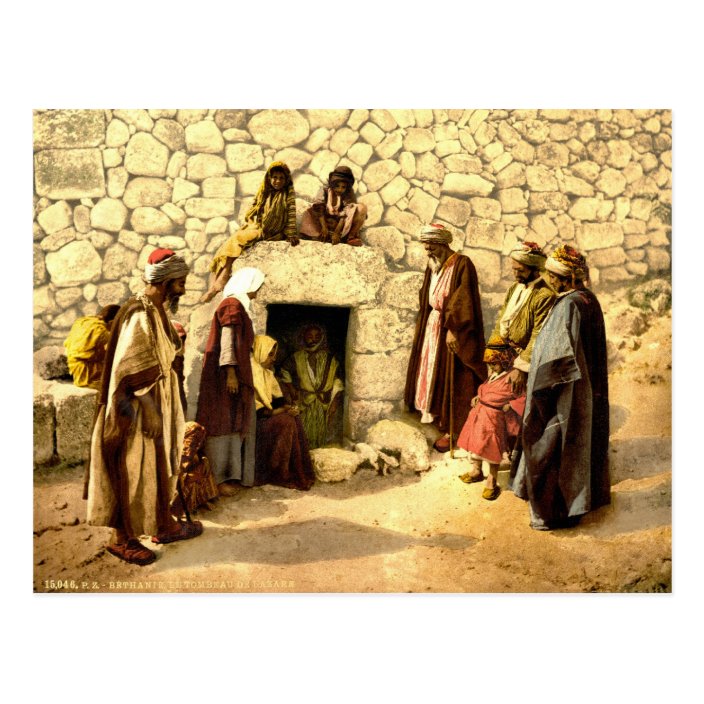
My mother died a few days ago. She was a remarkable godly woman. I’m reflecting on death as a Christian. John 11 comes to mind. How should we respond to death? It is natural and good to mourn the loss of a loved one. In John 11, Lazarus was sick. Lazarus died. Jesus loved Lazarus. Jesus saw the grief to others caused by the death of Lazarus (33). The emotions of the moment overwhelmed him. And so Jesus wept. As fellow humans with Jesus, we can relate. When my mother died, I wept. But I would weep again, hard, when I’d see my brother weep or my children weep. The death of loved ones hurt, even when or if we believe true and comforting things about them. Jesus wept despite believing that Lazarus was in a better place. Jesus wept despite knowing that Lazarus was no longer suffering. He referred to the death of Lazarus as sleep (no suffering, temporary, see verse 11). These Jesus knew both to be true. And still, Jesus wept. He wept because Jesus is human, with all the emotions that come with that. But Jesus also wept because, as God, he knew the meaning of and reason for death. Evil, moral and natural, including death, pain and suffering, is a result of sin brought into the good world that God the Son created in the beginning. So Jesus wept.
But Jesus also comforted those who wept with Him over Lazarus by telling them the purpose of this providential moment. Jesus raised Lazarus from the dead; he commanded the stone to be removed and called Lazarus forth from it. By raising Lazarus from the dead, Jesus was demonstrating to onlookers that the Son of Man has power over death. Christ, and not death, will have the final word in this fallen world. He had already said to Mary and Martha, the sisters of Lazarus: “Your brother will rise again” (23). Martha said to him, “I know that he will rise again in the resurrection on the last day.” Jesus said to her, “I am the resurrection and the life. Whoever believes in me, though he die, yet shall he live, and everyone who lives and believes in me shall never die. Do you believe this?” She said to him, “Yes, Lord; I believe that you are the Christ, the Son of God, who is coming into the world.”
Now notice the second response to death, given here by Martha, believe or trust in Jesus. The resurrection that Jesus performed was not intended to impress, it was not an end in itself, it was not to inspire people to be nice (although raising Lazarus was certainly an act of profound compassion and kindness). So then why did Jesus perform the resurrection? What response did he intend to elicit? Jesus said that God had sovereignly brought about this occasion, the illness and death of Lazarus, “for the glory of God, so that the Son of God may be glorified through it,” and “so that they [ordinary people] may believe you [the Father] sent me.” Jesus raised Lazarus to demonstrate that the Son of God has the power to resurrect dead people, those dead spiritually in their trespasses and sins and those dead physically lying in a tomb. Jesus showed that He can and will reverse the consequences of sin, spiritual and physical death. He is the “resurrection and the life” and all those who believe in Him will live an abundant life forever. How does he do this? He brings life to others by laying down his own life for them. Later in the passage, it is Caiaphas the High Priest, who gets it, albeit unwittingly, when he says to the others concerning the plot to kill Jesus (50-53): “it is better for you that one man should die for the people, not that the whole nation should perish.” He did not say this of his own accord, but being high priest that year he prophesied that Jesus would die for the nation, and not for the nation only, but also to gather into one the children of God who are scattered abroad. So from that day on they made plans to put him to death.”
I once had a young person tell me that the purpose of Jesus in the world, and any miracles he may have performed, was mainly to inspire people to be nice to one another. But is that what Jesus says was his purpose here? If Jesus only had the goal of inspiring human kindness, no one would have responded with resentment. But some did. They understand what the the resurrection of Lazarus meant. It meant, as Jesus had been teaching, that man’s only hope to escape the clutches of everlasting death was faith in Christ Himself. This drove some to believe but others to plot (45). Are you a believer or plotter? He that has ears to hear, let him hear.
Glenn Loury “Why do Racial Inequalities Persist?”
22 Oct“
Over the last 40 years, I’ve explored why, notwithstanding the success of the civil rights movement, the subordinate status of African-Americans persists. Key to my thinking about this intractable problem has been the need to distinguish the role played by discrimination against black people from that played by counterproductive behavioral patterns among blacks.
This puts what is a very sensitive issue rather starkly. Many vocal advocates for racial equality have been loath to consider the possibility that problematic patterns of behavior could be an important factor contributing to our persisting disadvantaged status. Some observers on the right of American politics, meanwhile, take the position that discrimination against blacks is no longer an important determinant of unequal social outcomes. I have long tried to chart a middle course—acknowledging antiblack biases that should be remedied while insisting on addressing and reversing the patterns of behavior that impede black people from seizing newly opened opportunities to prosper. I still see this as the most sensible position.
These two positions can be recast as causal narratives. One is what I call the “bias narrative”: racism and white supremacy have done us wrong; we can’t get ahead until they relent; so we must continue urging the reform of white American society toward that end.
The other is what I call the “development narrative,” according to which it is essential to consider how a person comes to acquire those skills, traits, habits, and orientations that foster successful participation in American society. To the extent that African-American youngsters do not have the experiences, are not exposed to the influences, and do not benefit from the resources that foster and facilitate their human development, they fail to achieve their full human potential. This lack of development is what ultimately causes the persistent, stark racial disparities in income, wealth, education, family structure, and much else. (The charts and tables on this and the next several pages offer a glimpse of the magnitude of these disparities.)
In terms of prescribing intervention and remedy, these causal narratives point in very different directions. The bias narrative says that we need to have a “conversation” about race: white America must reform itself; racism must end; we need more of this or that, whatever the “this” or “that” is on the agenda of today’s race reformers. One hears this kind of talk, one reads these exhortations, in newspapers and other media every day.
The development narrative puts more onus on the responsibilities of African-Americans to develop our human potential. It is not satisfied with wishful thinking like: “If we could only double the budget for some social program, the homicide rate among young African-American men would be less atrocious.” Or, “If we can just get this police department investigated by the Department of Justice, then.…” The development narrative asks, Then what? Then it will be safe to walk on the south side of Chicago after midnight?
Meanwhile, the terms themselves—race and discrimination—are often bandied about without being rigorously defined. In a 2002 book, The Anatomy of Racial Inequality, I sketched a theory of race applicable to the social and historical circumstances of the U.S., speculated about why racial inequalities persist, and advanced a conceptual framework for thinking about social justice in matters of race.[1] Because there remains so much confusion in today’s public discussions about race and racial inequality, I need to revisit that framework. Bear with me. The relevance of this conceptual excursion will be clear soon enough.”
Read the rest by getting the pdf below.
An American French Revolution
4 SepFrom the National Review: The Gospel of Jean-Jacques
“A central theme of Carlyle’s narrative is “the Gospel of Jean-Jacques” — Jean-Jacques Rousseau, author of The Social Contract and other utopian works. Rousseau is the leading spirit of the cultural Left, in our time as in his. He voiced the great paradox of the Left — libertarian selfism in morals combined with coercive, collectivist statism in political arrangements.
Rousseau’s first writings present an anthropology that, in essence, prevails on the cultural Left today. He envisions human beings as bundles of individual desire. He is preoccupied with autonomy, “the power of willing or rather of choosing, . . . and the feeling of this power.” He identifies self-love as the predominant human impulse. But (in sharp contrast to the doctrine of original sin and to earlier secular thinkers such as Hobbes and Machiavelli) he sentimentalizes self-love. He argues that human beings are fundamentally unaggressive by nature. He teaches a feelings-based morality and argues that compassion can ensure a benign social order. He imagines a prehistoric libertarian golden age, and he aspires to utopia.
Meanwhile, he denounces existing institutions as corrupt. The Social Contract famously opens, “Man is born free, and everywhere he is in chains.” Rousseau and the cultural Left that follows him must find their way from an autonomy-obsessed, hedonistic notion of human nature to a collectivist, coercive theory of government organized for purposes of reform. Rousseau accomplished this paradox with his theory of the General Will.about:blankabout:blank
Rousseau’s concept is that, human nature being essentially benign, the impulses of the general public inevitably tend toward the common good. He grounds this notion in a sentimental deism (“The voice of the people is in fact the voice of God”). True freedom therefore requires conforming each person’s will to the General Will. It is the “real will” of each citizen. Thus, as Rousseau expressly states in The Social Contract (and as Robespierre despotically asserted), people can be “forced to be free.”
These concepts readily passed from Rousseau’s sentimental deism, to Hegel’s doctrine of world-historical progress, to Marx, and to progressivism today. The concepts lend themselves to a mystical exaltation of the state (and of leaders who speak on its behalf) as constituting the General Will. Such thinking contrasts with most of Anglo-American political thought, which emphasizes human corruptibility, is adamant to place restraints on power, and seeks incremental reform.”
Read it all.
Above the Law: The Data Are In on Police, Killing, and Race
24 JunFrom the Public Discourse:
Police killing is not the work of vigilant warriors defending society at great personal cost, and sometimes going too far. It is the day-in, day-out petty tyranny of a taxpayer-funded bureaucratic lobby group. The difference is that, unlike other public sector unions, police unions have military-gra
Source: Above the Law: The Data Are In on Police, Killing, and Race
The Peculiar Case of Liberalism in American Political History
17 JunHow liberal were the founders? Does the word “Lockean” capture it well? What was the nature of any liberalism they embraced (or rejected)? What had religion to do with any of it? Insightful essay in Law and Liberty by James Patterson. Excerpt:
Recently, political philosophers D. C. Schindler, Mark T. Mitchell, and Patrick Deneen have decided to assess the state of American liberalism and decide whether it is worth defending. In their view, it is not. In Freedom from Reality, Schindler argues that that liberalism has its foundation in the political philosophy of John Locke, and Locke’s philosophy is “diabolical” in its original Greek meaning of “divisive”—that Lockean liberty divides the individual from firm notions of the good, from other individuals, and from attachment to the created world. In The Limits of Liberalism, Mitchell laments how liberalism facilitates the abandonment of place and tradition, in which the autonomous individual senses no obligation to her homeland or even her family, but rather is a citizen of the world committed to personal consumption and identity politics. Finally, Deneen, in his sweeping Why Liberalism Failed, outlines how liberalism relies on pre-liberal institutions to further its ideological goals of technological, economic, and political liberation. Technological liberation frees the individual from physical limits of the body. Economic liberation frees the individual from constraints on satisfying any number of personal preferences or desires. Political liberation frees the individual from external authorities that condemn the improper use of technology or money.
Read together, the summary position would be this: the divisions inherent in Lockean liberty divided individuals from their world, giving them a false sense of freedom from their neighbors and compatriots, and directed them to dissolve communities for the sake of cosmopolitan ends of global capital and imperial redistribution.While Schindler, Mitchell, and Deneen have offered forceful critiques of liberalism, their arguments have shortcomings, and one of them will be the subject of this essay. The shortcoming is methodological. One problem with political philosophy is the tendency to overstate the importance of ideas and understate the importance of other factors, especially contingency and the role of political actors. As a result, liberalism becomes, as Samuel Goldman has argued, a Geist and critiques of liberalism become Geistgeschicten. In other words, liberalism becomes a kind of trans-historical political actor driving the behaviors and events in the world, which then requires describing all those behaviors and events in terms of the advancement of liberalism. While liberal ideas have had a powerful influence on contemporary politics, they are simply insufficient and too diverse to explain either individuals or their responses to contingencies. To provide some needful correction, therefore, I will put the three authors in conversation with the work of Philip Hamburger, who has chronicled the relationship between liberalism as its developed among leading individuals and institutions in the American context.
However, Deenan and other Catholic scholars make a mistake when they attribute either absolutism and liberalism to Protestant Reformers. See Mark David Hall’s article here.
Read the rest here
James Anderson on the Court’s [sleight of hand] Reasoning in Bostock
16 JunFrom James Anderson’s blog:
How then does the Court argue the point? First, it articulates a sufficient condition for violations of Title VII:
If the employer intentionally relies in part on an individual employee’s sex when deciding to discharge the employee—put differently, if changing the employee’s sex would have yielded a different choice by the employer—a statutory violation has occurred. (p. 9)
Having established this condition, it proceeds by way of illustrative examples to show that any SOGI discrimination will inevitably meet this condition and thereby violate Title VII. Here are the two paradigmatic cases offered by the Court:
Consider, for example, an employer with two employees, both of whom are attracted to men. The two individuals are, to the employer’s mind, materially identical in all respects, except that one is a man and the other a woman. If the employer fires the male employee for no reason other than the fact he is attracted to men, the employer discriminates against him for traits or actions it tolerates in his female colleague. Put differently, the employer intentionally singles out an employee to fire based in part on the employee’s sex, and the affected employee’s sex is a but-for cause of his discharge. Or take an employer who fires a transgender person who was identified as a male at birth but who now identifies as a female. If the employer retains an otherwise identical employee who was identified as female at birth, the employer intentionally penalizes a person identified as male at birth for traits or actions that it tolerates in an employee identified as female at birth. Again, the individual employee’s sex plays an unmistakable and impermissible role in the discharge decision. (pp. 9-10)
So here’s the reasoning in the first case. Both employees have the trait attracted-to-men. Only one is fired, and the reason he’s fired is because he’s a man. The other employee has exactly the same trait, but she keeps her job because she’s a woman. Ergo, the first employee was discriminated against based on his sex, which Title VII prohibits.
The problem with the example, though, is that it prejudicially describes the situation so as to deliver the conclusion that there was sex-based discrimination. Suppose we say that the relevant trait is not attracted-to-men but rather same-sex-attracted. Under that description, the biological sex of the employee turns out to be irrelevant: “changing the employee’s sex” would not have “yielded a different choice by the employer.” Presumably what the employer objects to is homosexuality as such, regardless of whether it’s male or female homosexuality. (I suppose there could be cases where an employer discriminates against male homosexuals but not female homosexuals, or vice versa, but obviously such cases aren’t in view here.)
Note in particular the reference to “the employer’s mind” in the excerpt above. What is the objectionable trait in the employer’s mind? Is it attraction to men? Or is it same-sex attraction? Clearly the two are not logically or conceptually equivalent. But the entire argument hangs on the first being the relevant trait rather than the second. Yet it’s most plausibly the second that serves as the basis for the discrimination. If that’s the case, the Court’s argument collapses.
The same analysis can be applied to the second example. In the decision of the employer, is the relevant trait identifies-as-male? Or is it identifies-as-other-than-birth-sex? If it’s the second, then there’s no discrimination based on sex, because “changing the employee’s sex” would not yield “a different choice by the employer.” Again we see that the example has been prejudicially constructed so as to ‘trigger’ the Court’s test for sex-based discrimination.
That’s not quite the end of the issue, however. Notice that the Court’s test asks whether “the employer intentionally relies in part on an individual employee’s sex when deciding to discharge the employee” (emphasis added). Gorsuch anticipates the kind of rebuttal I gave above and offers a response to it, namely, that an employer cannot determine whether an employee is homosexual or transgender without reference to the employee’s sex. Thus, for example, Frank can’t tell whether Andy is gay without knowing that Andy is male, and so Frank would have to “rely in part” on Andy’s sex in any decision to hire or fire him on the basis of Andy’s sexual orientation.
Here’s how Gorsuch tries to make the argument, again by way of example:
There is simply no escaping the role intent plays here: Just as sex is necessarily a but-for cause when an employer discriminates against homosexual or transgender employees, an employer who discriminates on these grounds inescapably intends to rely on sex in its decisionmaking. Imagine an employer who has a policy of firing any employee known to be homosexual. The employer hosts an office holiday party and invites employees to bring their spouses. A model employee arrives and introduces a manager to Susan, the employee’s wife. Will that employee be fired? If the policy works as the employer intends, the answer depends entirely on whether the model employee is a man or a woman. To be sure, that employer’s ultimate goal might be to discriminate on the basis of sexual orientation. But to achieve that purpose the employer must, along the way, intentionally treat an employee worse based in part on that individual’s sex. (p. 11; italics original, bold added)
The point is clear: the employer’s decision to fire the “model employee” depends in part on his recognition that the employee is female. Thus, reasons the Court, the discrimination “relies in part” or “is based in part” on the employee’s sex. The employer is quite self-conscious about this. The employer knowingly (and thus intentionally) reaches his decision partly on the basis of the employee’s sex.
The flaw in this argument is that it conflates two distinct things:
- discrimination on the basis of X
- discrimination on the basis of Y, with reliance on X in the process
That one has to take X into account in order to discriminate on the basis of Y simply does not entail that one is thereby discriminating on the basis of X. It’s entirely possible to adopt a normative stance with respect to Y (favoring some Ys over other Ys) without adopting any normative stance with respect to X, even if one has to take X into account when determining Y.
To make things more concrete, consider this scenario. George owns a store that sells shoes for both men and women. He hires two people as store clerks, Andy and Barbara. Over time, George notices that some of his stock is going missing. Based on good evidence, he concludes that one of his two employees has been stealing items. As he further investigates, he discovers that all the stolen items are men’s shoes. Reasoning that a man would be far more likely to take men’s shoes than a woman, he concludes that Andy is the culprit and fires him.
Now clearly George’s decision “relied in part” on Andy’s sex. It was “based in part” on the fact that Andy is a man rather than a woman. Moreover, George’s reliance on that fact was quite intentional. But should we conclude that George is guilty of discrimination based on sex? Did George violate Title VII?
If you think so, I doubt anything else I could say would persuade you otherwise. The “reliance on sex” in George’s decision-making is clearly benign, yet it parallels the “reliance on sex” in Gorsuch’s hypothetical scenario above. What was the relevant trait or action in George’s decision to fire Andy? Was it male-shoe-stealing or was it simply shoe-stealing? What was George’s motivation for firing Andy? Did it involve any prejudice regarding Andy’s sex? The answers to these questions should be obvious.
Enough has been said, I trust, to demonstrate the fallacious nature of the argument at the heart of the Court’s opinion. Even granting what the Court claims about “the ordinary public meaning” of the Title VII statute, the notion that “discrimination based on homosexuality or transgender status necessarily entails discrimination based on sex” is just flat-out confused. It’s a bad ruling that will have very harmful consequences (and not just for religious employers).
If you have the time and patience, I would encourage you to read all three opinions (the majority and the two dissents). Alito’s dissent is devastating; he completely dismantles Gorsuch’s arguments and lays bare the many problematic implications of the Court’s decision.
June 15, 2020, was not a good day for the Supreme Court of the United States.
Ryan Anderson on Gorsuch’s Reasoning
16 JunSum: “Justice Gorsuch’s position would either require the elimination of all sex-specific programs and facilities or allow access based on an individual’s subjective identity rather than his or her objective biology. When Gorsuch claims that “transgender status [is] inex¬tricably bound up with sex” because “transgender status” is defined precisely in opposition to sex, he presumes the very sex binary his opinion will help to further erode.”
Can political liberalism and religious liberty (accommodation) coexist?
29 AprCan political liberalism and religious liberty (accommodation) coexist?
Similar argument made in Smith’s game-changing book Pagan and Christian in the City: “The Supreme Court might soon address this issue. Four Supreme Court justices (led by Justice Samuel Alito) began 2019 by suggesting their willingness to revisit a landmark decision with stark views on this question. In the 1990 case Employment Division v. Smith, a five-justice majority (led by Justice Antonin Scalia) made it virtually impossible to secure, under the First Amendment’s Free Exercise Clause, religious-based exemptions to laws that apply to everyone and do not overtly or covertly discriminate against religion (what lawyers call “neutral laws of general applicability”). The Smith decision presumes a deep tension between religious exercise and the common good. In Smith’s view, the democratic process must almost always resolve that tension. Courts, therefore, almost always deny religious accommodation requests. Justice Alito and his colleagues, however, said Smith “drastically cut back on the protection provided by the Free Exercise Clause,” and effectively invited requests to reverse it.
Revisiting Smith possesses significant cultural salience. Many of today’s progressives, conservatives, and libertarians share — knowingly or not — Smith’s critical shortcoming: a failure to explain why religion in particular and religious exercise in particular should shape the common good, even when they go against the grain of secular visions adopted in law. Revisiting Smith provides an opening to address this shortcoming. The Court should take it, as this oversight puts the American tradition of self-government at stake.
Smith and many elements of the modern American left and right possess this shortcoming because they evaluate the social worth of religious pluralism against some set of liberal values that, in their view, should supersede religious duties. For Smith, the superseding value is majoritarianism: Religious pluralism is good when democratic majorities decide it is worth their solicitude. For progressives, religious pluralism is good to the extent it supports what law professor Mark Movsesian calls “equality as sameness.” Any religious practice, institution, or tradition that understands equality differently is publicly unacceptable. For some conservatives and libertarians, religious pluralism is good simply because self-expression is good. On this view, religious liberty deserves protection simply because self-expression deserves protection — nothing particular to religion here does any work. Finally, for other conservatives who dispute that the common good is served by diverse religious expression, religious liberty is part of the common good only to the extent it establishes a particular religion’s orthodoxy.
It is not surprising that what Stanford’s Michael McConnell called “the most thoroughly liberal political community in the history of the world” would strive to define even religion around liberal ideals — but it is problematic. Liberal democracy, as Alexis de Tocqueville observed, is “particularly liable to commit itself blindly and extravagantly to general ideas.” This is partly because liberalism is, as Samuel Huntington put it in Conservatism as an Ideology, an “ideational” ideology. It “approach[es] existing institutions with an ‘ought demand’ that the institutions be reshaped to embody the values of the ideology.” This “ought demand” is present in social-contract theory, and it poses a particular problem for religious liberty. More often than not, religious exercise is manifested in rituals and institutions that are prior to — and claim to outlast — political liberalism. Reshaping religious exercise around liberal values can therefore dilute religion.
The consequences of dilution are not limited to religion. As our founders recognized, diluting religious exercise poses a problem for political liberalism; self-government presupposes certain moral virtues that religion cultivates and liberalism does not. In a culture that does not appreciate a distinct contribution from religious exercise, engagement with religion, both personally and in public life will erode — along with the corresponding cultivation of religious exercise’s personal and public goods.”
Read the rest from National Affairs (and definitely read Smith’s book Pagan and the Christian in the City). Smith argues that there has been and always will be a vying for supremacy between the transcendent religion of Christianity and the immanent religion of modern paganism. Compromises in the name of political liberalism are at best short-lived and at worst preferential towards modern paganism. Any worldview that finds meaning and purpose and epistemological grounding in this world rather than another will always marginalize the transcendent religionists to the outer periphery of society (it’s a logical necessity of sorts).
 thereformedmind